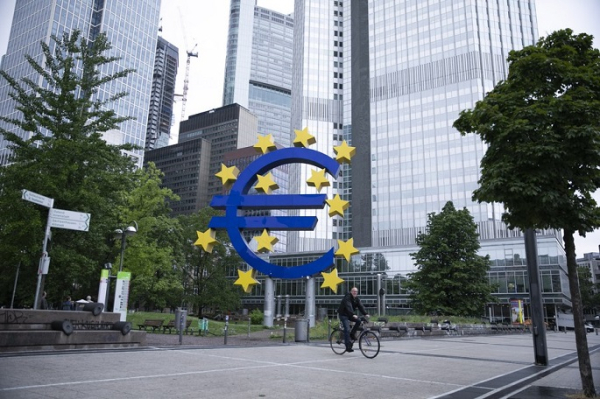


Euro area annual inflation is expected to rise to 2.5 percent in March from 1.9 percent in February, exceeding the European Central Bank (ECB)'s 2 percent target, driven largely by a sharp rebound in energy prices, according to a flash estimate published by Eurostat on Tuesday, reported Xinhua.
Major euro area economies registered notable increases, with Germany climbing to 2.8 percent from 2.0 percent, France to 1.9 percent from 1.1 percent, and Spain to 3.3 percent from 2.5 percent. The surge was propelled by energy prices, which jumped to 4.9 percent from -3.1 percent, according to the statistical office.
The ongoing tensions in the Middle East, now dragging into their fifth week with no end in sight, have halted the downward trend in energy prices and pushed them markedly higher across Europe.
Germany's energy prices increased by 7.2 percent year-on-year, marking the first rise since December 2023, data from the Federal Statistical Office (Destatis) showed on Monday.
The French National Institute of Statistics and Economic Studies said Tuesday that energy prices in the country are projected to rise by 7.3 percent year-on-year in March, reversing a 2.9-percent decline in February.
Portugal also saw energy prices climb by 5.8 percent in March, after a 2.2 percent drop in February, prompting many Portuguese motorists to cross into Spain for cheaper fuel.
Meanwhile, services inflation in the euro area eased slightly to 3.2 percent from 3.4 percent, prices for food, alcohol and tobacco edged down to 2.4 percent from 2.5 percent, while the core inflation, excluding energy, food, alcohol and tobacco, fell to 2.3 percent in March from 2.4 percent in February.
Although other main inflation categories have yet to show a pronounced effect, ING chief economist Bert Colijn warned that the recent surge in energy prices cannot be viewed in isolation.
He noted that ongoing tensions in the Middle East, which erupted after the United States and Israel launched joint strikes against Iran on Feb. 28, pose upside risks not only to energy prices but also to food and goods prices, through fertilizer shortages and supply chain disruptions. The longer these disruptions persist, he said, the greater the risk that both headline and core inflation will face broader upward pressure.
Actually, global benchmark Brent crude settled at 112.78 dollars a barrel on Monday, and is on track for a record monthly gain of over 50 percent in March.
Germany's central bank, the Deutsche Bundesbank, projected last week that inflation in Germany would pick up further in the coming months, potentially reaching around 3 percent in the near term. A prolonged conflict could keep inflation elevated for longer, it added.
The Bulgarian National Bank has also warned that inflation in Bulgaria is projected to rise to 3.7 percent in 2026, with geopolitical tensions in the Middle East identified as a key external risk factor.
Statistics Netherlands (CBS) anticipates that inflationary pressures will continue to filter through a broad range of items, including holiday flights and certain food products in the coming months. Dutch consumers have started paying more for products because expensive raw materials, packaging, and high wages are being passed on by companies, according to the CBS.
"The war in the Middle East has made the outlook significantly more uncertain, creating upside risks for inflation and downside risks for economic growth," the European Central Bank has said earlier.
Euro area inflation is projected to average 2.6 percent in 2026, while economic growth this year is expected to stand at 0.9 percent.
- Eurozone
- Inflation
Source: www.dailyfinland.fi
